This article explains why traditional “rest until healed” advice is outdated and how early, guided movement can actually speed recovery after injury or surgery. Research shows that controlled motion improves blood flow, reduces stiffness, prevents muscle loss, and helps tissues heal stronger. While certain post-surgical cases still require temporary rest, most people benefit from a balanced, progressive approach called optimal loading. Physical therapists help determine what movements are safe, how to progress activity, and how to restore strength and confidence. The key message: rest protects, but movement heals — and physical therapy ensures you move at the right time and in the right way.
The Old Belief: Rest Until You Are Healed
For many years, standard advice after an injury was simple: protect it, rest it, add ice, compression and elevation. Many people still know this as the old RICE or PRICE approach. The assumption was that movement might cause more damage, so staying still felt like the safest choice. British Journal of Sports Medicine+1
While that thinking made sense at the time, newer research has revealed an important truth. Long periods of complete rest can actually slow recovery. Too much immobility can lead to stiffness, weakness, loss of balance, and even more pain over time. In many situations, your body needs movement, not just rest, in order to heal well. chiro.org+1
What New Research Tells Us about Movement
Modern sports medicine and rehabilitation research now emphasizes a more active approach. The PEACE and LOVE framework, published in the British Journal of Sports Medicine, encourages early education, gentle loading and activity after soft tissue injuries instead of relying only on rest and ice. Women’s Football Hub
For many muscle, tendon, and joint injuries, early and controlled movement often leads to better outcomes than staying completely still. Studies show that early mobilization can:
- Improve blood flow, which delivers oxygen and nutrients to healing tissue
- Prevent joint stiffness and muscle loss
- Support better alignment and organization of collagen as tissue rebuilds
- Help restore coordination, balance, and body awareness
In short, when movement is introduced at the right time and in the right way, it helps the body remember how to move again and supports better long term function. chiro.org+2Europe PMC+2
Why Early and Guided Movement Works
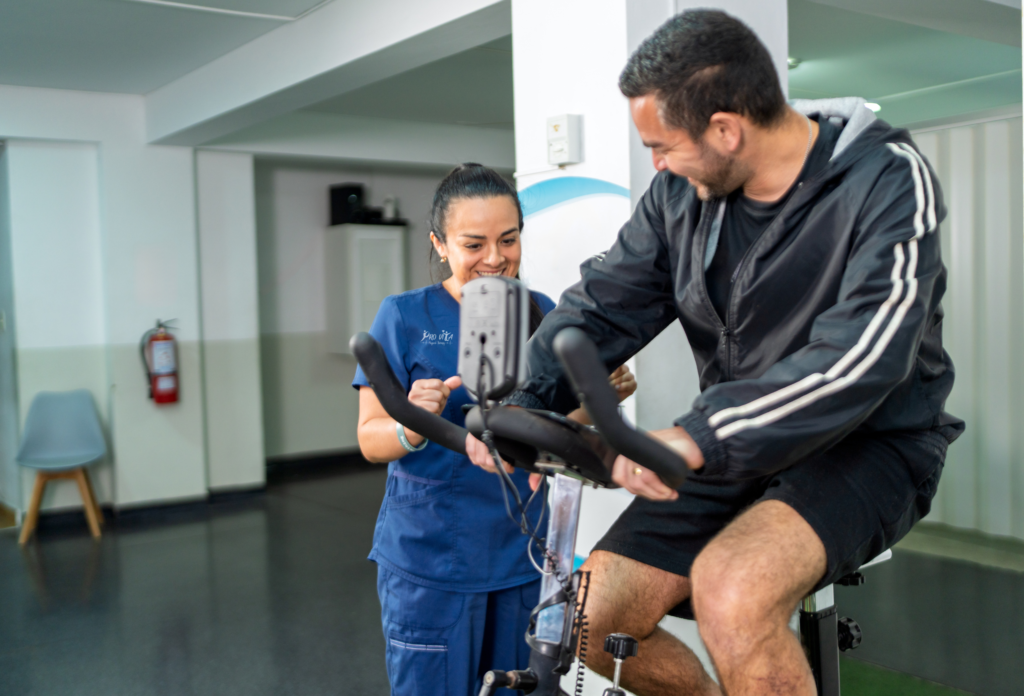
At Pro Vita Physical Therapy, we use an approach called optimal loading. Instead of total rest, we help you move in safe, tolerable ways that match where your body is in the healing process.
Research on early mobilization after injury and surgery shows that this kind of guided movement can: chiro.org+2Europe PMC+2
- Speed up recovery by improving circulation and tissue activity
- Reduce stiffness and keep joints and soft tissues moving well
- Maintain or rebuild strength and balance
- Support better confidence and decrease fear of movement
Another important idea in the research is mechanotherapy. This is the concept that movement and loading can actually stimulate tissue repair on a cellular level. When prescribed correctly, exercise sends signals to tendon, muscle, cartilage and bone that encourage them to remodel and grow stronger. British Journal of Sports Medicine+2Europe PMC+2
Guided movement is not just about feeling better today. It also helps reduce the risk of long term problems like chronic pain, recurring sprains, and ongoing instability.
When Rest Still Matters
There are still times when rest and protection are important. Examples include:
- Some fractures and complex bone injuries
- Large tendon or ligament repairs
- Specific post operative restrictions given by your surgeon
In these cases, your surgeon may require a short period of limited movement or non weight bearing. At Pro Vita, we respect those guidelines and work closely with your surgical team to decide when and how to safely start moving again.
The goal is always balance. We want to protect fragile tissues while also preventing stiffness, weakness and loss of function that can come with doing nothing for too long. Taylor & Francis Online+2Google Books+2
How Physical Therapy Helps You Find the Right Level of Activity
Every person and every injury is different. That is why a one size fits all rule like “just rest” or “just push through it” does not work.
A physical therapist can:
- Evaluate your specific injury, surgery or condition
- Identify what movements are safe now and which should wait
- Design a step by step plan to progress your activity level
- Teach you how to move with better form to reduce stress on healing tissues
- Help you return to the activities you care about, whether that is work, sports, or daily life
At Pro Vita Physical Therapy, we focus on education and empowerment. We want you to understand your body, your injury and your plan, so that you feel confident, not fearful, when you move.
The Takeaway: Rest Protects, Movement Heals
Rest still has a place, especially right after a serious injury or surgery. But for many conditions, staying still for too long can slow you down instead of speeding you up.
Gentle, guided movement helps tissues heal, keeps joints mobile, supports strength and balance, and improves your overall outlook. The science is clear. When it is introduced at the right time and at the right level, movement is one of the most powerful tools we have in rehabilitation. Women’s Football Hub+2Taylor & Francis Online+2
Whether you are recovering from surgery, managing a sports injury, or working to regain mobility after an illness, our therapists at Pro Vita Physical Therapy are here to help you move better and heal smarter.
Learn More with Pro Vita Physical Therapy
If you have recently had an injury or surgery and you are not sure how much you should be moving, we would be happy to help.
📍 Visit your nearest Pro Vita Physical Therapy location to schedule an evaluation or consultation.
Together, we will create a plan that helps you safely return to the activities that matter most to you.
References
- Bleakley C M, Glasgow P, MacAuley D C. PRICE needs updating, should we call the POLICE. British Journal of Sports Medicine. 2012 46(4):220. British Journal of Sports Medicine+2pure.ulster.ac.uk+2
- Dubois B, Esculier J F. Soft tissue injuries simply need PEACE and LOVE. British Journal of Sports Medicine. 2020 54(2):72. Women’s Football Hub
- Kannus P. Immobilization or early mobilization after an acute soft tissue injury. The Physician and Sportsmedicine. 2000 28(3). chiro.org+1
- Khan K M, Scott A. Mechanotherapy: how physical therapists prescription of exercise promotes tissue repair. British Journal of Sports Medicine. 2009 43(4):247–252. British Journal of Sports Medicine+2Europe PMC+2
- Early mobilization in post orthopedic surgery patients: a scoping review. Journal of Multidisciplinary Healthcare. 2023. Findings include improved range of motion, faster function recovery, less pain and shorter hospital stays with early mobilization compared with delayed movement. Taylor & Francis Online
- Ichikawa T et al. Effect of a generalized early mobilization and rehabilitation protocol on outcomes in trauma patients admitted to the intensive care unit. Critical Care. 2025 29:337. Demonstrates that early mobilization in a high acuity setting can be feasible and beneficial. BioMed Central
The Old Belief: Rest Until You Are Healed
For many years, standard advice after an injury was simple: protect it, rest it, add ice, compression and elevation. Many people still know this as the old RICE or PRICE approach. The assumption was that movement might cause more damage, so staying still felt like the safest choice.
While that thinking made sense at the time, newer research has revealed an important truth. Long periods of complete rest can actually slow recovery. Too much immobility can lead to stiffness, weakness, loss of balance, and even more pain over time. In many situations, your body needs movement, not just rest, in order to heal well.
What New Research Tells Us about Movement
Modern sports medicine and rehabilitation research now emphasizes a more active approach. The PEACE and LOVE framework, published in the British Journal of Sports Medicine, encourages early education, gentle loading and activity after soft tissue injuries instead of relying only on rest and ice.
For many muscle, tendon, and joint injuries, early and controlled movement often leads to better outcomes than staying completely still. Studies show that early mobilization can:
- Improve blood flow, which delivers oxygen and nutrients to healing tissue
- Prevent joint stiffness and muscle loss
- Support better alignment and organization of collagen as tissue rebuilds
- Help restore coordination, balance, and body awareness
In short, when movement is introduced at the right time and in the right way, it helps the body remember how to move again and supports better long term function.
Why Early and Guided Movement Works
At Pro Vita Physical Therapy, we use an approach called optimal loading. Instead of total rest, we help you move in safe, tolerable ways that match where your body is in the healing process.
Research on early mobilization after injury and surgery shows that this kind of guided movement can:
- Speed up recovery by improving circulation and tissue activity
- Reduce stiffness and keep joints and soft tissues moving well
- Maintain or rebuild strength and balance
- Support better confidence and decrease fear of movement
Another important idea in the research is mechanotherapy. This is the concept that movement and loading can actually stimulate tissue repair on a cellular level. When prescribed correctly, exercise sends signals to tendon, muscle, cartilage and bone that encourage them to remodel and grow stronger.
Guided movement is not just about feeling better today. It also helps reduce the risk of long term problems like chronic pain, recurring sprains, and ongoing instability.
When Rest Still Matters
There are still times when rest and protection are important. Examples include:
- Some fractures and complex bone injuries
- Large tendon or ligament repairs
- Specific post operative restrictions given by your surgeon
In these cases, your surgeon may require a short period of limited movement or non weight bearing. At Pro Vita, we respect those guidelines and work closely with your surgical team to decide when and how to safely start moving again.
The goal is always balance. We want to protect fragile tissues while also preventing stiffness, weakness and loss of function that can come with doing nothing for too long.
How Physical Therapy Helps You Find the Right Level of Activity
Every person and every injury is different. That is why a one size fits all rule like “just rest” or “just push through it” does not work.
A physical therapist can:
- Evaluate your specific injury, surgery or condition
- Identify what movements are safe now and which should wait
- Design a step by step plan to progress your activity level
- Teach you how to move with better form to reduce stress on healing tissues
- Help you return to the activities you care about, whether that is work, sports, or daily life
At Pro Vita Physical Therapy, we focus on education and empowerment. We want you to understand your body, your injury and your plan, so that you feel confident, not fearful, when you move.
The Takeaway: Rest Protects, Movement Heals
Rest still has a place, especially right after a serious injury or surgery. But for many conditions, staying still for too long can slow you down instead of speeding you up.
Gentle, guided movement helps tissues heal, keeps joints mobile, supports strength and balance, and improves your overall outlook. The science is clear. When it is introduced at the right time and at the right level, movement is one of the most powerful tools we have in rehabilitation.
Whether you are recovering from surgery, managing a sports injury, or working to regain mobility after an illness, our therapists at Pro Vita Physical Therapy are here to help you move better and heal smarter.
Learn More with Pro Vita Physical Therapy
If you have recently had an injury or surgery and you are not sure how much you should be moving, we would be happy to help.
📍 Visit your nearest Pro Vita Physical Therapy location to schedule an evaluation or consultation.
Together, we will create a plan that helps you safely return to the activities that matter most to you.
References
- Bleakley C M, Glasgow P, MacAuley D C. PRICE needs updating, should we call the POLICE. British Journal of Sports Medicine. 2012 46(4):220. British Journal of Sports Medicine+2pure.ulster.ac.uk+2
- Dubois B, Esculier J F. Soft tissue injuries simply need PEACE and LOVE. British Journal of Sports Medicine. 2020 54(2):72. Women’s Football Hub
- Kannus P. Immobilization or early mobilization after an acute soft tissue injury. The Physician and Sportsmedicine. 2000 28(3). chiro.org+1
- Khan K M, Scott A. Mechanotherapy: how physical therapists prescription of exercise promotes tissue repair. British Journal of Sports Medicine. 2009 43(4):247–252. British Journal of Sports Medicine+2Europe PMC+2
- Early mobilization in post orthopedic surgery patients: a scoping review. Journal of Multidisciplinary Healthcare. 2023. Findings include improved range of motion, faster function recovery, less pain and shorter hospital stays with early mobilization compared with delayed movement. Taylor & Francis Online
- Ichikawa T et al. Effect of a generalized early mobilization and rehabilitation protocol on outcomes in trauma patients admitted to the intensive care unit. Critical Care. 2025 29:337. Demonstrates that early mobilization in a high acuity setting can be feasible and beneficial. BioMed Central
- Kjaer M et al. Textbook of Sports Medicine: Basic Science and Clinical Aspects of Sports Injury and Physical Activity. Blackwell Science. Google Books+2BMJ+2
