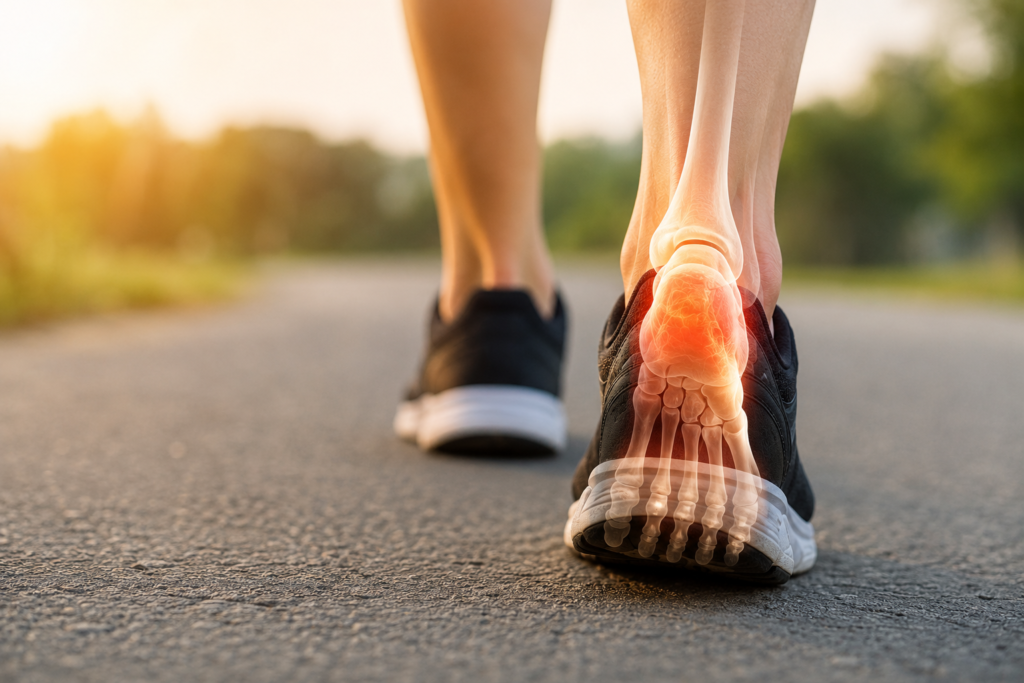
Foot pronation is a normal movement that occurs every time you walk or run. Most people never think about how their feet move until pain begins to appear. When foot pronation becomes excessive, it can contribute to issues affecting the feet, ankles, knees, hips, and even the lower back.
Maybe it starts as aching arches after long walks. Maybe your knees begin hurting during workouts. Maybe you notice uneven shoe wear, recurring shin splints, or discomfort that keeps returning despite rest.
In many cases, one contributing factor may be excessive foot pronation.
At Pro Vita Physical Therapy, we believe pain is rarely just about the location of symptoms. The body functions as a connected system, and movement quality matters. Understanding foot pronation can help people better recognize how foot mechanics influence the knees, hips, lower back, posture, and overall movement efficiency.
What Is Foot Pronation?
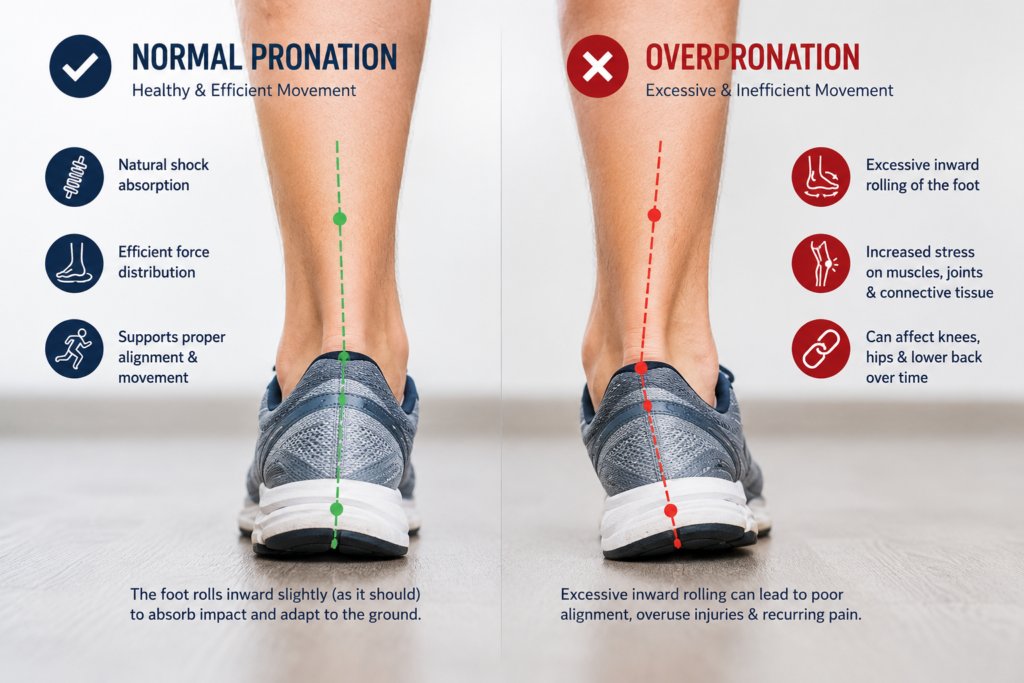
Pronation is a completely normal movement of the foot during walking and running.
As your foot lands on the ground, the arch naturally flattens slightly to help absorb shock and adapt to the surface beneath you. This movement helps distribute force throughout the body.
Pronation itself is not bad.
The issue occurs when pronation becomes excessive, poorly controlled, or persistent throughout movement.
This is often referred to as overpronation.
When the foot collapses inward excessively, it can alter the alignment and mechanics of the ankle, knee, hip, and pelvis. Over time, this may contribute to inefficient movement patterns, tissue overload, and recurring discomfort.
Signs of Excessive Foot Pronation
Common signs of excessive pronation may include:
- Flat or collapsing arches
- Ankles rolling inward
- Uneven shoe wear on the inside edge
- Foot fatigue after standing or walking
- Heel pain or plantar fasciitis
- Shin splints
- Knee discomfort
- Hip or lower back tightness
- Balance instability
- Recurrent running-related injuries
Not everyone with flat feet has pain, and not every painful condition is caused by pronation. That is why proper assessment matters.
At Pro Vita Physical Therapy, we focus on understanding why movement dysfunction occurs instead of simply chasing symptoms.
Why Foot Pronation Matters for Movement
Your feet are the foundation of movement.
When foot control changes, the rest of the body often compensates.
Research continues to show associations between excessive foot pronation and altered lower extremity mechanics, including changes in ankle motion, knee alignment, and gait patterns.
In some individuals, prolonged dysfunctional mechanics may contribute to:
- Increased stress on the plantar fascia
- Achilles tendon irritation
- Patellofemoral knee pain
- Tibial stress issues
- Reduced balance and stability
- Running-related overuse injuries
This does not mean pronation is automatically harmful. Human movement is complex, and every body adapts differently.
However, when the body repeatedly compensates around poor foot control, symptoms can eventually appear elsewhere.
That is why treating pain alone often is not enough.
At Pro Vita Physical Therapy, we believe:
“Pain is the alarm. Dysfunction is often the fire.”
What Causes Excessive Pronation?
Several factors can contribute to overpronation, including:
Muscle Weakness
Weakness in the foot intrinsic muscles, calves, hips, or glutes may reduce stability during walking and running.
Poor Movement Control
Limited neuromuscular control can lead to inefficient loading patterns during activity.
Mobility Restrictions
Restricted ankle mobility may force the foot to compensate excessively during gait.
Foot Structure
Some people naturally have lower arches or more flexible feet.
Overuse and Training Load
Sudden increases in running, standing, sports participation, or physical activity may overload tissues.
Footwear
Unsupportive or worn-out shoes may contribute to poor force distribution in some individuals.
Treating Foot Pronation: Do Orthotics Help?
Not necessarily.
Orthotics can sometimes help reduce stress on irritated tissues or improve foot mechanics temporarily, especially when paired with the right rehabilitation approach.
Recent systematic reviews suggest foot orthoses may positively influence lower limb mechanics and rearfoot motion in individuals with flexible flat feet or excessive pronation.
But orthotics alone are rarely the complete answer.
If weakness, poor movement control, balance deficits, or load intolerance remain unaddressed, symptoms may continue returning.
At Pro Vita Physical Therapy, our goal is not dependency.
Our goal is resilience.
That often means combining symptom management with:
- Strength development
- Movement retraining
- Mobility work
- Balance training
- Progressive loading
- Gait and movement assessment
- Education for long-term independence
Can Exercise Help?
Yes — in many cases, targeted exercise and movement retraining can improve function significantly.
Emerging research suggests gait retraining and corrective exercise programs may help reduce excessive pronation and improve movement stability.
Effective rehab often focuses on:
- Foot intrinsic strengthening
- Calf strengthening
- Hip and glute stability
- Single-leg balance
- Walking and running mechanics
- Progressive loading tolerance
Recovery is rarely about a single exercise.
It is about improving the body’s ability to tolerate movement efficiently and confidently over time.
Why Symptoms Often Return
One of the biggest frustrations patients experience is recurring pain.
The discomfort improves temporarily, but eventually returns.
This often happens because symptoms calm down before true functional recovery is complete.
For example:
- Knee pain may decrease while weakness and faulty mechanics remain.
- Foot pain may improve while balance deficits persist.
- Back pain may settle while compensations continue during walking.
At Pro Vita, we emphasize long-term recovery instead of short-term relief alone.
When Should You Seek Professional Evaluation?
You should consider an evaluation if you experience:
- Persistent foot or ankle pain
- Recurring running injuries
- Difficulty standing or walking comfortably
- Frequent shin splints
- Balance instability
- Knee or hip pain linked to activity
- Repeated flare-ups despite rest
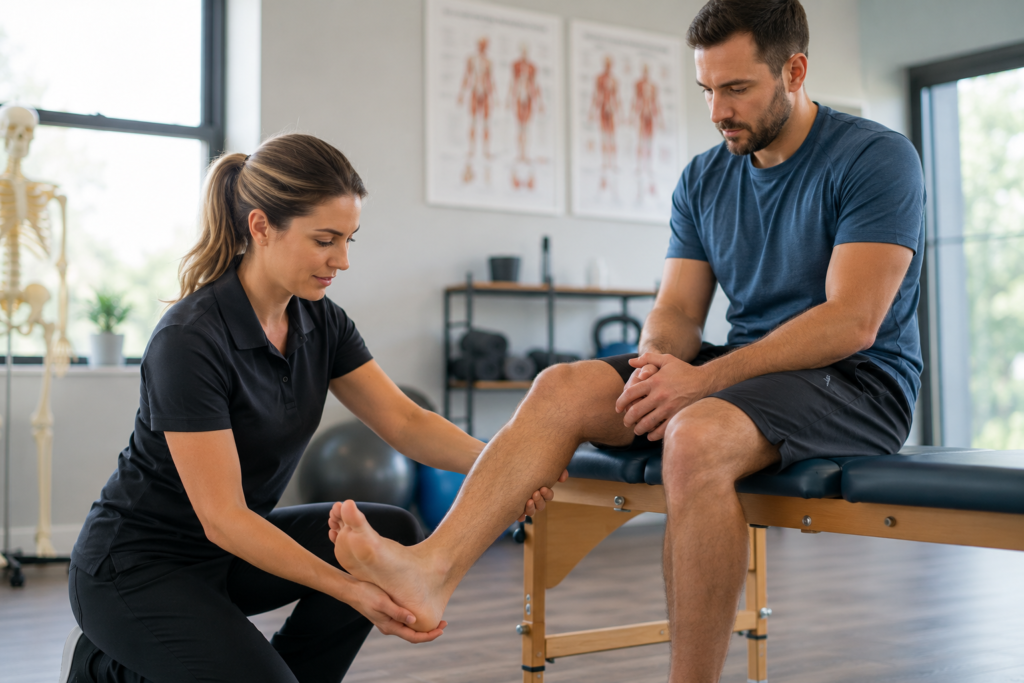
A thorough assessment can help determine whether pronation is actually contributing to your symptoms — and more importantly, what underlying factors may be driving it.
Our Approach
At Pro Vita Physical Therapy, we believe movement quality matters.
We do not simply focus on reducing pain temporarily.
We focus on:
- Understanding the root cause of dysfunction
- Improving movement efficiency
- Restoring confidence in movement
- Building long-term resilience
- Helping patients stay active for life
Because true recovery is not just about feeling better for today.
It is about moving better for the long term.
References
- Mousavi SH, Khorramroo F, Jafarnezhadgero A. Gait retraining targeting foot pronation: A systematic review and meta-analysis. PLOS ONE. 2024.
- Jafarnezhadgero AA, et al. Effects of foot orthoses application during walking on lower limb joint angles and moments in adults with flat feet: A systematic review with meta-analysis. Journal of Biomechanics. 2024.
- Hussain G, et al. Effects of 8-Weeks Systematic Corrective Exercise Program on Body Posture and Stability in Pronation Distortion Syndrome. Journal of Population Therapeutics and Clinical Pharmacology. 2024.
- Cáceres-Madrid MV, et al. The Influence of Prefabricated Foot Orthosis Use on Lower Limb Biomechanics. Healthcare. 2025.
