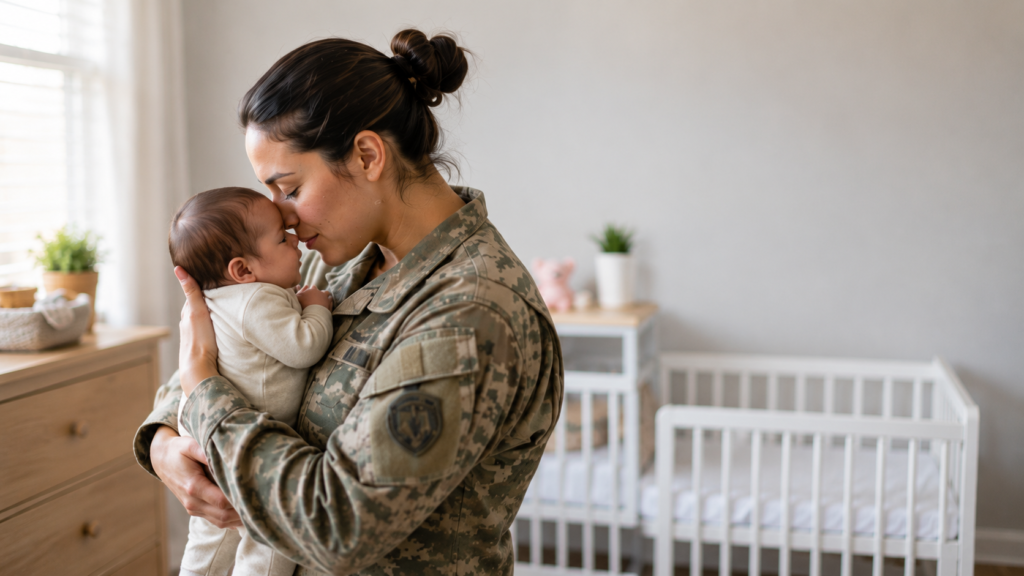
Postpartum recovery for military women involves more than healing after childbirth. Many service members face the challenge of recovering from pregnancy while preparing to return to physically demanding military responsibilities. Returning to duty often means rebuilding strength, endurance, movement quality, and confidence—not simply waiting for time to pass.
That is why being medically cleared after pregnancy does not always mean the body is fully ready for military duty.
At Pro Vita Physical Therapy, we believe recovery is not just about time passing or symptoms calming down. True recovery means rebuilding movement quality, strength, load tolerance, confidence, and long-term resilience.
For military women, postpartum recovery must bridge the gap between healing and readiness.
Why Postpartum Recovery for Military Women Is Different
Pregnancy and childbirth place significant demands on the body. Military service adds another layer of demand.
A civilian postpartum recovery plan may focus on returning to walking, daily activity, or general exercise. Military women may need to return to:
- Running
- Rucking
- Carrying heavy equipment
- Military fitness testing
- Tactical movements
- Lifting and loading tasks
- Long workdays
- Field training
- Physically demanding occupational duties
These tasks require more than basic healing. They require strength, endurance, coordination, shock absorption, core control, pelvic floor function, and confidence under load.
Military postpartum recovery is also shaped by policy and readiness expectations. For example, the U.S. Army announced that its 2022 postpartum policy allows women 365 days after childbirth to meet height and weight standards and pass the Army Combat Fitness Test, doubling the prior 180-day period. (U.S. Army) Navy resources also describe postpartum return-to-duty planning, wellness physical fitness assessments, and policy considerations for postpartum service members. (Navy Medicine)
These policy changes recognize something important: rebuilding after pregnancy takes time. But time alone is not the whole answer.
The body needs progressive preparation.
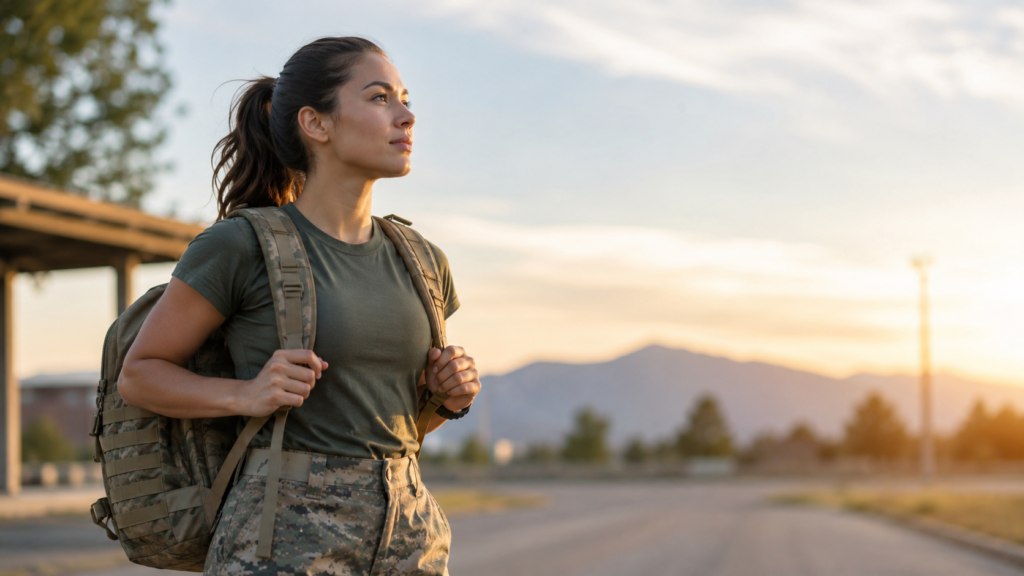
Why Being Medically Cleared Does Not Always Mean Being Ready
Many women receive medical clearance around the early postpartum period and understandably assume that means they are ready to return to normal activity.
Medical clearance is important. It helps confirm that healing is progressing and that there are no major medical concerns requiring additional care.
But medical clearance is not the same as physical readiness.
There are three different concepts to understand:
Medical healing means the body has progressed through the early stages of recovery and there are no major medical red flags.
Functional recovery means the body can handle daily tasks such as walking, lifting, carrying, feeding, and caring for a baby.
Military readiness means the body can tolerate higher-level demands such as running, loaded movement, lifting, rucking, testing, and training under fatigue.
A woman may be medically cleared but still experience:
- Core weakness
- Pelvic pressure
- Urinary leakage
- Pain with running
- Low back discomfort
- Hip or pelvic pain
- Reduced endurance
- Poor load tolerance
- Fear of returning to training
- Feeling “not like herself” physically
This is where specialized physical therapy can help. It looks beyond whether the body has healed enough to resume activity and asks a deeper question:
Is the body prepared for the demands being placed on it?
Why Your Body May Feel Different After Pregnancy
Many postpartum women describe feeling disconnected from their bodies. Movements that once felt natural may feel unfamiliar. Running may feel heavy. Lifting may feel unstable. Core strength may feel reduced. Balance may feel different.
This does not mean the body is broken.
It means the body has changed, adapted, and now needs intentional rebuilding.
Pregnancy and childbirth can affect several key systems that matter for military performance.
Core Strength
The core helps transfer force between the upper and lower body. It supports lifting, carrying, running, rucking, and tactical movement.
After pregnancy, the abdominal wall may feel stretched, weak, or poorly coordinated. This can affect how the body manages pressure during lifting, impact, or loaded movement.
For military women, core recovery is not just about doing sit-ups again. It is about rebuilding the ability to brace, breathe, rotate, lift, carry, and move efficiently.
Breathing Mechanics
Breathing is closely connected to core and pelvic floor function.
During pregnancy, the rib cage, diaphragm, abdominal wall, and pelvic floor all adapt. After delivery, the body may need help restoring efficient breathing and pressure management.
This matters during:
- Running
- Rucking
- Lifting
- High-intensity training
- Carrying gear
- Fitness testing
Poor pressure management can contribute to symptoms such as leaking, pelvic heaviness, low back discomfort, or reduced trunk stability.
Pelvic Floor Function
The pelvic floor helps support the pelvic organs, contributes to continence, and works with the diaphragm, abdominal wall, and deep core.
Postpartum pelvic floor symptoms may include urinary leakage, pelvic pressure, heaviness, pain, or difficulty tolerating impact.
Urinary leakage during running or training may be common, but it should not be dismissed as “normal” or something military women simply have to accept.
Return-to-running literature continues to emphasize the importance of considering pelvic health, musculoskeletal function, and individualized readiness when progressing postpartum running. A 2024 Delphi consensus study developed expert recommendations for postpartum return-to-running programming, highlighting the need for structured guidance rather than simply returning based on time alone. (PubMed) A 2024 BJSM article also proposed clinical and exercise professional recommendations for postpartum return-to-running guidance. (British Journal of Sports Medicine)
Balance and Coordination
Pregnancy changes posture, center of mass, joint loading, and movement strategy. After delivery, balance and coordination may not immediately return to pre-pregnancy levels.
For military women, this matters during:
- Loaded carries
- Uneven terrain
- Field tasks
- Step-downs
- Squatting
- Kneeling
- Climbing
- Agility-based movements
Movement quality is not just about looking “correct.” It affects how force is absorbed and distributed through the body.
Load Tolerance
Load tolerance is the body’s ability to handle stress over time. After pregnancy, the body may need gradual exposure to:
- Bodyweight training
- Resistance training
- Running impact
- Ruck weight
- Equipment load
- Repeated lifting
- Fatigue-based movement
This is one of the biggest differences between general postpartum recovery and military postpartum rehabilitation.
A service member may feel fine during daily activity but struggle when load, speed, impact, distance, or fatigue increases.
Returning to Running, Rucking, and Fitness Testing
Running and rucking are not simple activities for the postpartum body.
They require repeated impact, single-leg control, trunk stability, pelvic floor coordination, breathing efficiency, and adequate strength.
Rucking adds additional stress because the body must manage external load while walking over distance, often under fatigue. That load can increase demand on the feet, ankles, knees, hips, pelvis, and spine.
Military fitness testing may also require sprinting, lifting, dragging, carrying, planking, push-ups, or other high-effort movements depending on branch and testing standards.
This is why return to military fitness should be based on function, not just weeks postpartum.
A progressive return may include:
- Restoring breathing and core coordination
- Rebuilding foundational strength
- Improving hip, glute, and trunk control
- Restoring single-leg stability
- Gradually adding impact
- Returning to running intervals
- Progressing load carriage
- Preparing for military-specific testing
- Building endurance and fatigue tolerance
This type of progression helps reduce the risk of doing too much too soon.
It also helps military women rebuild confidence.
How Specialized Physical Therapy Can Help
Physical therapy for military women after pregnancy should not be generic.
The goal is not simply to “exercise again.” The goal is to prepare the body for the specific demands of military service.
A specialized physical therapy plan may include:
Comprehensive Movement Assessment
A physical therapist can assess how the body moves during squatting, lunging, step-downs, balance tasks, lifting, running mechanics, and loaded movements.
This helps identify compensations that may increase stress on the back, hips, knees, ankles, or pelvic floor.
Root-Cause Evaluation
Pain is often the alarm, but dysfunction may be the underlying issue.
For example:
- Knee pain may be influenced by hip weakness or foot mechanics.
- Low back pain may be related to reduced trunk control or load tolerance.
- Leaking during running may involve pelvic floor coordination and pressure management.
- Pain with rucking may involve strength, mobility, endurance, or load progression.
At Pro Vita, we do not simply chase symptoms. We look for the underlying contributors that may be limiting recovery.
Strength Restoration
Strength is essential for military readiness.
Rehab may focus on:
- Glutes
- Hips
- Core
- Back
- Legs
- Single-leg control
- Upper body strength
- Functional lifting
- Carrying mechanics
The goal is not just to feel better. The goal is to build capacity.
Core and Breathing Rehabilitation
Postpartum core rehab should begin with coordination before progressing to higher-level strength.
This may include breathing mechanics, pressure management, abdominal wall control, and progressive loading.
For military women, this eventually needs to translate into real tasks such as lifting gear, carrying weight, running, and moving under fatigue.
Pelvic Floor Assessment When Appropriate
Not every postpartum issue is a pelvic floor issue, but pelvic floor function can play an important role in return-to-duty readiness.
A pelvic floor assessment may be helpful when symptoms include:
- Urinary leakage
- Pelvic pressure
- Heaviness
- Pain
- Difficulty returning to impact
- Reduced confidence with running or lifting
The Navy and Marine Corps women’s health resources include postpartum pelvic floor training and postpartum return-to-duty resources, reflecting the importance of supporting service women through this transition. (Navy Medicine)
Running Assessment
A return-to-running plan may include assessment of:
- Cadence
- Stride mechanics
- Hip control
- Pelvic stability
- Foot and ankle mechanics
- Impact tolerance
- Symptoms during or after running
The goal is not just to run again. The goal is to run with control, confidence, and appropriate progression.
Load Progression
Returning to rucking or carrying equipment should be gradual.
A physical therapist can help progress:
- Distance
- Weight
- Terrain
- Speed
- Recovery time
- Strength demands
- Symptom response
This is especially important because postpartum service members may feel pressure to resume training before their bodies are fully prepared.
Recovery Is Also About Prevention
Postpartum rehabilitation is not only about getting back to duty.
It is also an opportunity to reduce the risk of future injuries.
Military service can already carry a high musculoskeletal load. Research has continued to examine childbirth history and musculoskeletal injury risk in military personnel. A 2025 study on pregnancy and musculoskeletal injury in U.S. service women noted that factors such as female sex, lower fitness, and higher BMI have been identified among potential military musculoskeletal injury risk factors. (Europe PMC) A 2023 study also examined whether childbirth history and pregnancy-related complications are associated with musculoskeletal injury among female service members. (Canadian Science Publishing)
While research is still evolving, the practical takeaway is clear:
Military women deserve recovery plans that prepare them for real physical demands, not just basic activity.
Rehab can help improve:
- Strength
- Movement quality
- Running tolerance
- Load tolerance
- Core control
- Pelvic floor coordination
- Confidence
- Injury resilience
The goal is long-term readiness, not short-term symptom relief.
When Should Military Women Seek Physical Therapy?
Military women may benefit from physical therapy after pregnancy if they experience:
- Pain during running
- Pain with rucking
- Difficulty lifting equipment
- Low back, hip, pelvic, knee, or foot pain
- Persistent weakness
- Urinary leakage during exercise
- Pelvic pressure or heaviness
- Fear of returning to training
- Difficulty preparing for military fitness testing
- Feeling physically unprepared despite being medically cleared
- Symptoms that improve with rest but return with training
- A C-section scar that feels painful, restricted, or sensitive
- Difficulty rebuilding endurance
You do not need to wait until symptoms become severe.
Early support can help identify limitations before they become recurring problems.
The Pro Vita Physical Therapy Approach
At Pro Vita Physical Therapy, we believe postpartum recovery for military women should be individualized, progressive, and rooted in real-life function.
We focus on:
- Understanding your goals
- Identifying the root causes of symptoms
- Restoring movement quality
- Rebuilding strength
- Improving load tolerance
- Supporting return to running and rucking
- Addressing pelvic floor concerns when appropriate
- Reducing recurrence risk
- Helping you return to duty with confidence
We do not believe recovery should create dependency.
We believe healthcare should help people become stronger, more capable, more confident, and more independent long-term.
For military women, that means preparing the body not just to pass a test, but to meet the physical demands of service, motherhood, and life with greater resilience.
Frequently Asked Questions
When can I safely return to military fitness training after pregnancy?
There is no single timeline that applies to everyone. Medical clearance is important, but readiness should also consider strength, symptoms, pelvic floor function, endurance, running tolerance, and load capacity. A gradual, function-based progression is usually safer than returning based only on the number of weeks postpartum.
Can physical therapy help me return to rucking?
Yes. Physical therapy can help assess strength, core control, gait mechanics, hip stability, and load tolerance. A return-to-rucking plan should gradually progress weight, distance, terrain, and intensity while monitoring symptoms.
Is urinary leakage during running normal after childbirth?
Urinary leakage may be common, but it should not be considered something you simply have to live with. It can be a sign that the pelvic floor, breathing mechanics, pressure management, or impact tolerance need support.
Can I benefit from physical therapy after a C-section?
Yes. A C-section is a major abdominal surgery. Physical therapy can help with scar mobility, core coordination, breathing mechanics, strength rebuilding, posture, and gradual return to lifting, running, and military training.
How do I know if I am ready to return to duty?
Readiness should include more than medical clearance. You should be able to tolerate running, lifting, carrying, impact, prolonged standing, and military-specific tasks without worsening symptoms. A physical therapist can help assess readiness and build a progression plan.
What if I feel fine but still do not feel strong enough for military training?
That is a valid reason to seek support. Pain is not the only reason for physical therapy. If you feel weak, unstable, deconditioned, or unsure how to progress, physical therapy can help rebuild capacity safely and intentionally.
Final Thoughts
Returning to duty after pregnancy is not just about getting back to work.
It is about rebuilding the strength, confidence, movement quality, and resilience needed to meet the physical demands of military service.
Military women should not have to guess their way through postpartum recovery, push through symptoms, or accept dysfunction as normal.
With the right support, recovery can become more than a return.
It can become a rebuild.
At Pro Vita Physical Therapy, our goal is to help military women move better, feel stronger, and return to meaningful activity with confidence.
References
- U.S. Army. Increasing Post-Partum Return-to-Fitness Time Advances Women’s Health, Military Readiness. 2023. (U.S. Army)
- Navy Medicine. Postpartum Return to Duty Transition Guide. (Navy Medicine)
- Navy Medicine. Returning to Duty Postpartum Clinic Poster. 2024. (Navy Medicine)
- Navy Medicine. Women’s Health and Readiness Resources. (Navy Medicine)
- Deering RE, et al. Postpartum Return-to-Running Training Programme: International Delphi Study and Consensus Statement. 2024. (PubMed)
- Christopher SM, et al. Clinical and Exercise Professional Opinion of Return-to-Running Readiness After Childbirth. British Journal of Sports Medicine. 2024. (British Journal of Sports Medicine)
- Herrick MSR, et al. Extending Air Force Physical Fitness Postpartum Dwell Time. Military Medicine. 2024. (OUP Academic)
- Roach MH, et al. Association Between Pregnancy and Musculoskeletal Injury in U.S. Service Women. 2025. (Europe PMC)
- Edwards CM, et al. Does a History of Childbirth Impact Injury Prevalence and Performance in Female Military Members? 2023. (Canadian Science Publishing)
- ACOG. Physical Activity and Exercise During Pregnancy and the Postpartum Period. Current Committee Opinion. (acog.org)
