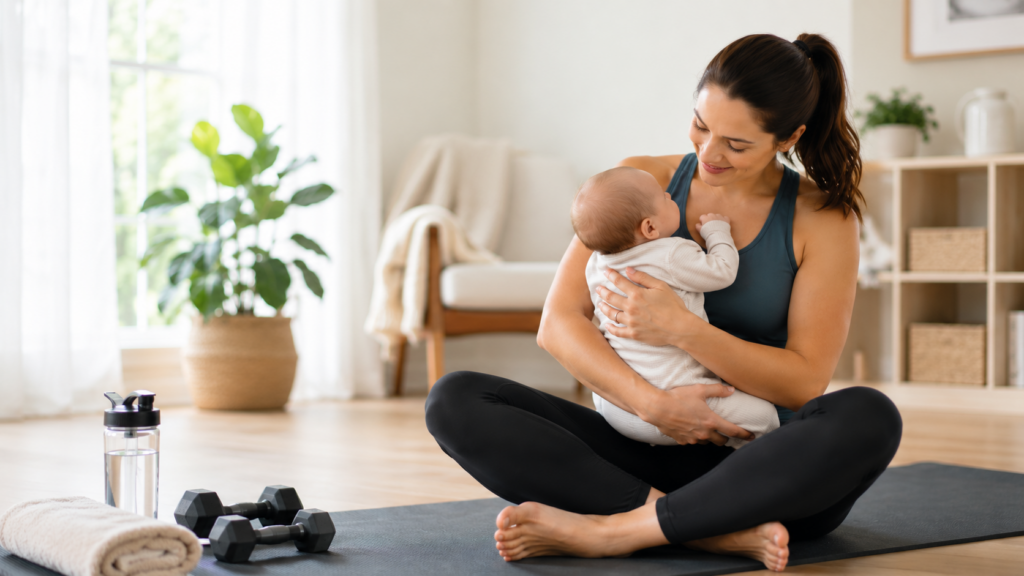
Recovery after pregnancy is different for every woman. While healing begins soon after childbirth, rebuilding strength, movement, and confidence often takes longer than many people expect. Physical therapy can help support recovery by improving function, reducing pain, and preparing your body for the physical demands of everyday life.
For many women, pregnancy and postpartum recovery are often discussed in terms of time. Six weeks. Three months. One year. But recovery is not only about the calendar.
It is about capacity.
Can your body tolerate lifting, carrying, walking, exercising, working, caring for a baby, and returning to the activities that matter to you?
At Pro Vita Physical Therapy, we believe pregnancy and postpartum recovery should be approached with compassion, education, and individualized care. Rather than focusing solely on timelines, we focus on restoring strength, movement, and confidence so women can return to the activities that matter most.
Pregnancy Places Real Physical Demands on the Body
During pregnancy, the body adapts to support both the mother and the growing baby. As the abdominal wall stretches to accommodate the growing baby, the body’s center of gravity shifts, breathing mechanics change, and the pelvic floor supports increasing pressure. These normal adaptations can affect posture, balance, joint loading, core function, and overall movement mechanics. After delivery, these systems do not automatically return to their previous function. Like other muscles throughout the body, they often need time, appropriate loading, and gradual rehabilitation to regain strength and coordination.
The American College of Obstetricians and Gynecologists notes that physical activity during pregnancy is generally associated with minimal risk and benefits most women, although exercise routines may need modification due to normal anatomic and physiologic changes.
This is an important point. Pregnancy does not mean the body is fragile. But it does mean the body is adapting.
Those adaptations deserve thoughtful support.
Common Physical Challenges During and After Pregnancy
Pregnancy and postpartum recovery may involve:
- Low back pain
- Pelvic girdle pain
- Hip discomfort
- Sciatic-type symptoms
- Core weakness
- Diastasis recti
- Pelvic floor dysfunction
- Urinary leakage
- Heaviness or pressure
- Pain with lifting or carrying
- Difficulty returning to exercise
- Reduced confidence with movement
The pelvic floor is a group of muscles at the bottom of the pelvis that supports the bladder, bowel, and uterus while also contributing to core stability, breathing, and movement. During pregnancy and childbirth, these muscles experience significant changes as they adapt to support both the growing baby and the demands of delivery. MedlinePlus notes that pregnancy and childbirth are common causes of pelvic floor weakness or injury.
This does not mean every woman will experience pelvic floor dysfunction. But symptoms such as leaking, pressure, pelvic pain, or difficulty returning to impact activity should not be dismissed as something women simply have to live with.
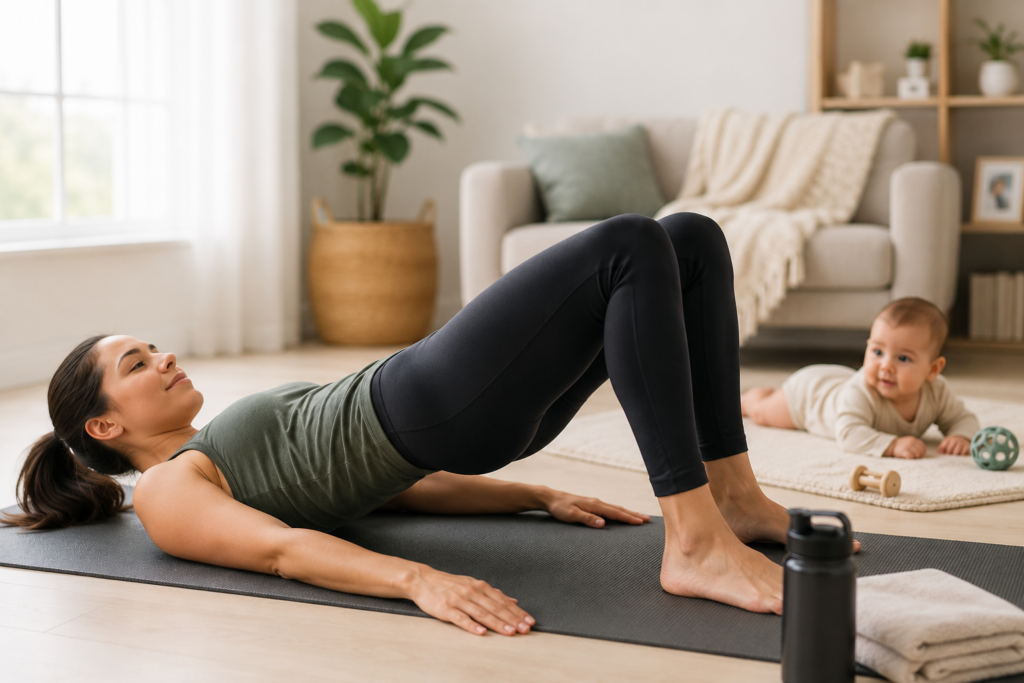
Why “Cleared” Does Not Always Mean Fully Recovered
Many women are medically cleared at a postpartum visit, but still feel disconnected from their bodies.
They may be told everything looks normal, yet still experience:
- Weakness
- Pain
- Leaking
- Pressure
- Heaviness
- Fear of exercise
- Difficulty lifting their baby or car seat
- Trouble returning to running or strength training
Being medically cleared simply means healing has progressed appropriately and there are no medical concerns preventing a return to activity. It does not necessarily mean the muscles, connective tissues, or movement patterns have fully recovered from the physical demands of pregnancy and childbirth. Rebuilding strength, coordination, and confidence often takes additional time and varies from one woman to another.
A 2022 review on postpartum recovery notes that recommendations for musculoskeletal intervention vary widely, from no activity until medical consultation to full clearance for self-guided exercise at six weeks.
This gap can leave women unsure of what to do next.
At Pro Vita Physical Therapy, we believe recovery should be guided by function, not just time.
The Physical Demands of Daily Motherhood
Postpartum recovery is not rest alone.
New mothers often return quickly to demanding activities such as:
- Lifting and carrying their baby
- Carrying a baby on one hip
- Repeatedly bending over a crib or changing table
- Holding awkward positions during feeding
- Carrying car seats
- Pushing strollers
- Lifting laundry baskets, groceries, and household items
- Getting up and down from the floor while caring for a child
- Climbing stairs while carrying a baby or supplies
- Returning to work
- Returning to exercise
- Managing sleep deprivation
These are real physical demands. If the body has not rebuilt strength, coordination, and load tolerance, recurring pain or dysfunction may develop.
This is why postpartum care should include more than symptom management.
Returning to Exercise After Pregnancy
While general timelines can provide helpful guidance, they do not account for how each individual is recovering. Two women who delivered on the same day may have very different levels of strength, endurance, pelvic floor function, and confidence with movement. A gradual return to activity should be guided by how the body is functioning, not solely by the number of weeks since delivery.
Returning to activity should consider:
- Delivery history
- Symptoms
- Pelvic floor function
- Abdominal wall function
- Sleep and fatigue
- Strength
- Pain
- Previous fitness level
- Mental readiness
- Type of activity
For higher-impact activities such as running, jumping, or heavy lifting, a more specific assessment may be needed.
Why Specialized Physical Therapy Can Help
Specialized pelvic health physical therapy can help women understand what their body needs during pregnancy or postpartum recovery. Every pregnancy, delivery, and recovery is different. Some women primarily need guidance with breathing and core coordination, while others may benefit from improving strength, restoring movement quality, addressing pelvic floor symptoms, or progressing safely back to higher-level activities. Rather than following a one-size-fits-all program, treatment should be based on each individual’s symptoms, goals, lifestyle, and physical examination.
Care may include:
- Pelvic health screening
- Education for daily movement demands
- Core and breathing retraining
- Hip and glute strengthening
- Pelvic floor coordination
- Posture and lifting mechanics
- Mobility work
- Balance and stability training
- Return-to-running progression
- Return-to-strength training guidance
The 2022 postpartum pelvic girdle pain clinical practice guideline from APTA Pelvic Health emphasizes evidence-based physical therapist practice including screening, diagnosis, intervention, and outcome assessment for postpartum pelvic girdle pain.
That level of individualized evaluation matters because no two recoveries are exactly the same.
Recovery Is Not About “Bouncing Back”
The phrase “bounce back” can make recovery feel rushed, pressured, or appearance-focused.
At Pro Vita Physical Therapy, we believe a better goal is to build forward.
That means helping women:
- Reconnect with their bodies
- Restore confidence in movement
- Rebuild strength
- Improve function
- Reduce recurring pain
- Return to activity safely
- Feel supported, not rushed
Recovery is not about proving how quickly you can return to exercise. It is about rebuilding the strength, movement, and confidence your body needs to support the demands of motherhood and long-term health.
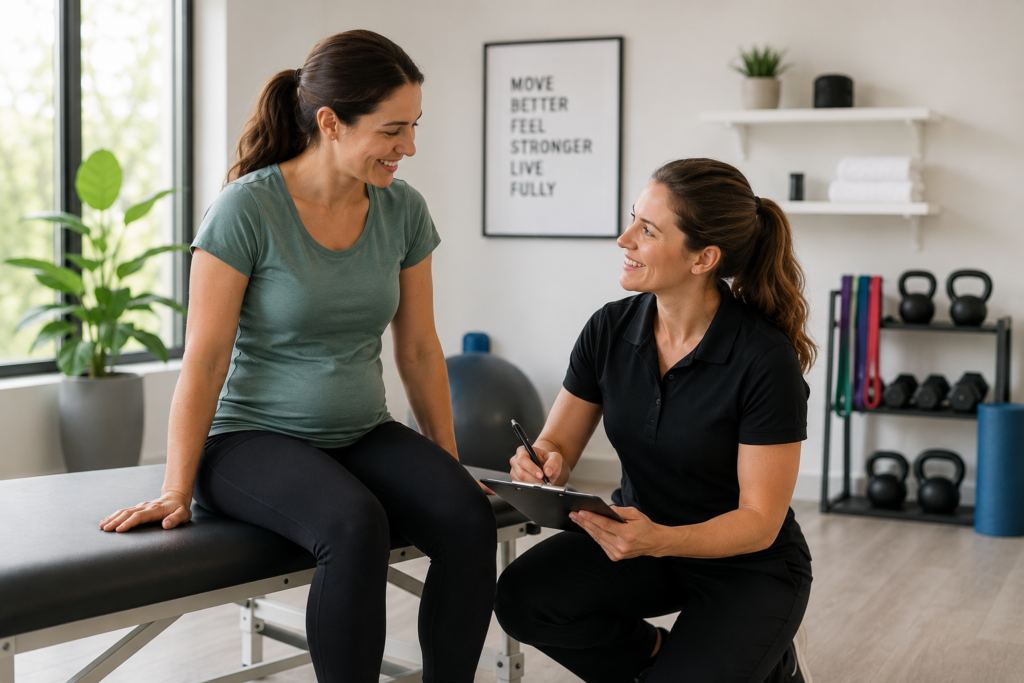
When to Seek Professional Care
Consider seeing a physical therapist if you experience:
- Persistent back, hip, or pelvic pain
- Leaking with coughing, sneezing, lifting, or exercise
- Pelvic heaviness or pressure
- Pain with walking or stairs
- Difficulty lifting or carrying your baby
- Fear or uncertainty about returning to exercise
- Pain with running or jumping
- Symptoms that continue beyond the early postpartum period
- A desire for a safe return-to-activity plan
You do not need to wait until symptoms become severe to get support.
The Pro Vita Physical Therapy Approach
At Pro Vita Physical Therapy, we believe pregnancy and postpartum recovery deserve thoughtful, individualized care.
Our goal is not simply to reduce symptoms. Our goal is to help women move better, feel stronger, understand their bodies, and rebuild long-term resilience.
Because recovery is not just about getting back to where you were. It is about building the strength, movement, and confidence to care for your family, return to the activities you enjoy, and move through life with resilience.
Frequently Asked Questions
Is it normal to leak urine after having a baby?
Occasional urinary leakage is common after pregnancy and childbirth, but it is not something you simply have to accept. Persistent leakage may indicate pelvic floor dysfunction that can often improve with appropriate evaluation and rehabilitation.
When should I start physical therapy after giving birth?
The appropriate timing depends on your delivery, symptoms, medical history, and your healthcare provider’s recommendations. Some women benefit from physical therapy during pregnancy, while others begin postpartum to address pain, improve function, or safely return to activity.
Can physical therapy help with diastasis recti?
Physical therapy cannot “close” every abdominal separation, but it can help improve abdominal wall function, breathing mechanics, core strength, and movement patterns that support daily activities and exercise.
When can I safely return to running after pregnancy?
Rather than relying only on a timeline, returning to running should be based on strength, pelvic floor function, movement quality, and the ability to tolerate impact without symptoms. A physical therapist can help determine readiness.
Do I need pelvic floor physical therapy even if I had a C-section?
Yes, some women benefit from pelvic health physical therapy after a cesarean delivery. Pregnancy itself places significant demands on the abdominal wall, pelvic floor, posture, and movement system, regardless of the method of delivery.
References
- American College of Obstetricians and Gynecologists (ACOG). (2020). Physical Activity and Exercise During Pregnancy and the Postpartum Period (Committee Opinion No. 804).
- American College of Obstetricians and Gynecologists (ACOG). (2020). ACOG Releases Updated Guidance on Exercise During Pregnancy and Postpartum.
- Selman, R., et al. (2022). Maximizing Recovery in the Postpartum Period: A Timeline for Rehabilitation from Pregnancy through Return to Sport. International Journal of Sports Physical Therapy.
- APTA Pelvic Health. (2022). Clinical Practice Guideline: Pelvic Girdle Pain in the Postpartum Population.
- Davenport, M. H., et al. (2025). 2025 Canadian Guideline for Physical Activity, Sedentary Behaviour and Sleep Throughout the First Year Postpartum. British Journal of Sports Medicine.
- MedlinePlus. (2024). Pelvic Floor Disorders.
